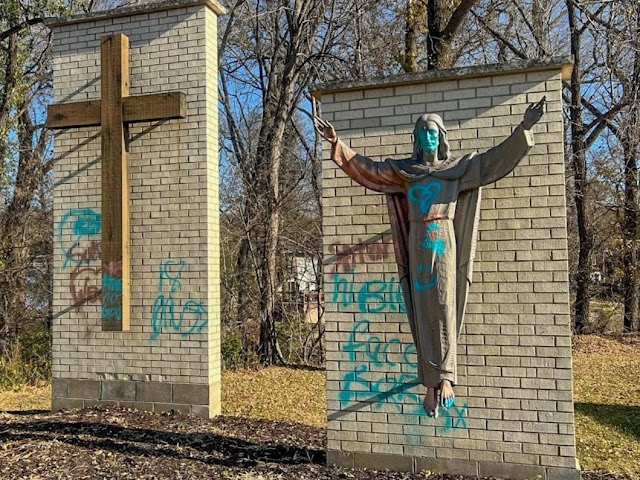
In the United States, Family Research Council (FRC) set out to analyze publicly available data to better understand the problem of hostility against churches and determine whether there has been a statistically significant increase over time.
DATA This update analyzes the data from 2024 and compares it to the previous six years (2018-2023). Our findings indicate that, although the annual number of incidents did not rise from the record high of 485 in 2023, the total in 2024 (415) remains significantly higher than the yearly totals recorded in 2018 through 2022. (Click on IMAGE to ENLARGE)
.png)
They have identified 1,384 acts of hostility against U.S. churches that occurred between January 2018 and December 2024. 2024 Family Research Council identified 415 hostile incidents in 2024, affecting a total of 383 churches. The data was obtained by reviewing open-sourced documents, reports, and media coverage that contained terms such as “church threats,” “church vandalism,” and “church arson.”5
CONTEXT The rise in crimes against churches is taking place in a context in which fewer Americans are attending religious services or identifying with a specific faith. According to Gallup, 42 percent of U.S. adults regularly attended religious services 20 years ago, but now that number has fallen to 30 percent.1 This decline means that fewer Americans share a common understanding of what church buildings represent. Additionally, a Pew Research Center study found that “80% of U.S. adults say religion is losing influence in American life.” This number has increased by six percentage points since 2022 and is the highest it has been in Pew’s surveys.2 In popular culture, Christianity is often treated lightly or outright mocked. The rapper Lil Nas X sparked controversy in 2024 by promoting his song “J Christ” with a depiction of himself on a cross. Demonic imagery has been embraced by pop culture figures like hip-hop artist Doja Cat.
Regardless of the perpetrator’s motives, such crimes can leave churches in physical, financial, and emotional disarray. Some churches struggle to cover the costs of repairs and fear future offenses.
MOTIVES Although a perpetrator’s motives are not always apparent, a few motive types were recorded in 2024. Incidents motivated by pro-abortion sentiments dropped significantly, with cases falling from 59 in 2022 and 11 in 2023 to just two in 2024. Satanic incidents also decreased, from 12 in 2023 to one in 2024. Anti-LGBT incidents decreased as well, although they remained high at 33 in 2024 (compared to 42 in 2023). Many of these incidents involved vandalism against churches that support LGBT activity, often in the form of stealing pride flags.22
CONCLUSION Although the total number of incidents slightly decreased in 2024, we observed a continuation of many of the previous year’s trends. Vandalism remained the most common type of incident, many states with high numbers of incidents in 2023 also ranked among the top in 2024, and many incidents were similar in nature to those from the previous year. Some significant differences in 2024 were the increase in gun-related incidents and the decrease in incidents motivated by pro-abortion sentiments. We identified 415 incidents in 2024; however, this figure may not represent the full scope of hostility against churches, as many cases likely went unreported to law enforcement or unpublished by news outlets or other publicly available sources. We rely on these sources for our data, which we compile and analyze to find patterns.
Comments